Corrugated Box Manufacturers · 8 stages in 3D

From kraft reel to delivered box. Every stage, every person, every rupee.

Walk through a working corrugated box plant. At every stage you'll see how the work is actually done, who does it, where money quietly leaks, and what changes with zappy.day.

Scroll to walk the factory floor
01 / 08

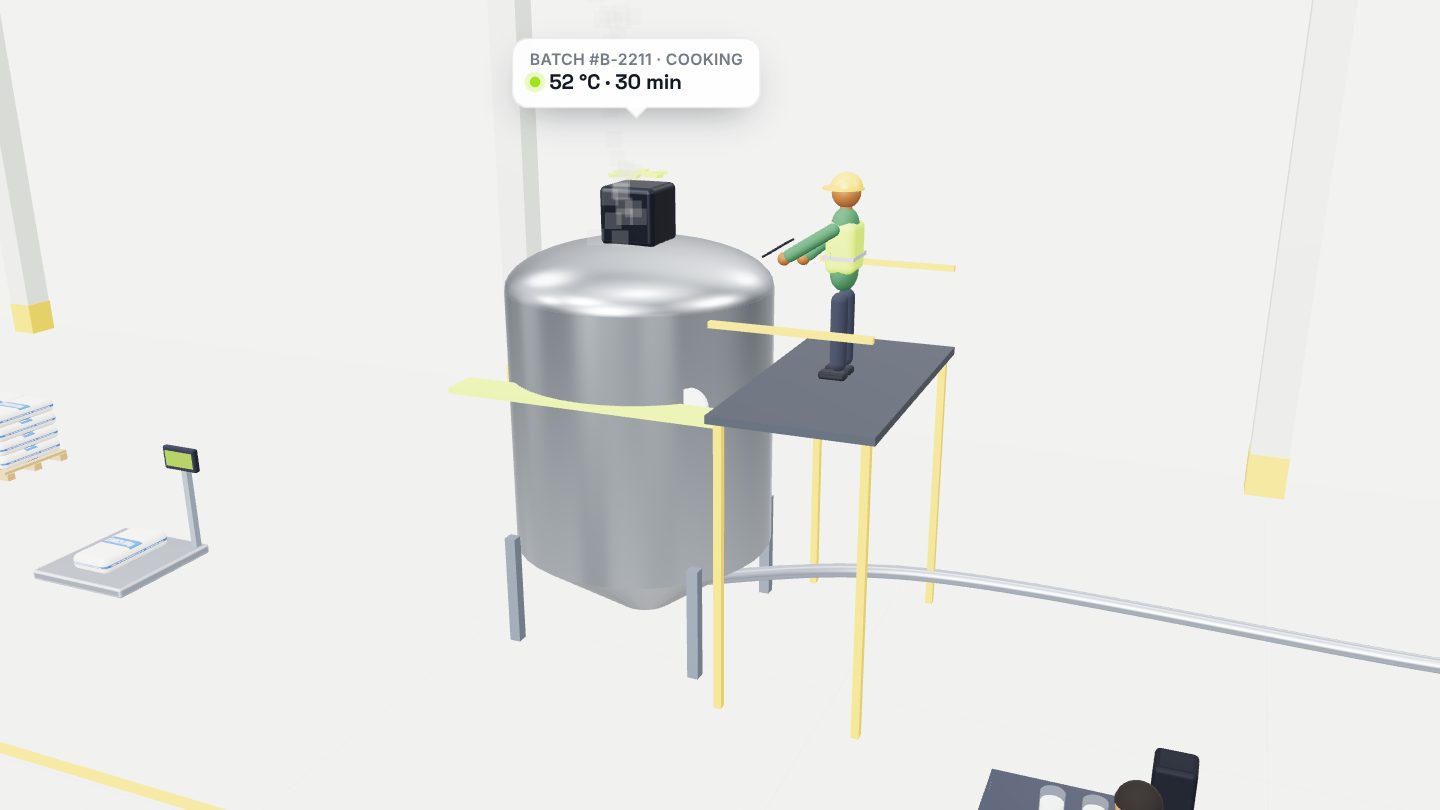
Paper reels & raw material

Kraft reels arrive by GSM, BF, deckle and supplier. The store keeper checks weight, moisture and grade, tags each reel and stacks it. When a job is planned, the right reels are pulled to the reel stands.

Who's involved: Store keeper, purchase executive, forklift operator
Where money leaks

Register says 40 reels of 120 GSM, the godown has 32. Wrong GSM or BF gets loaded to keep the corrugator running, and quality or margin takes the hit.

With zappy.day

Every reel is barcoded with GSM, BF, deckle, weight and supplier. Stock is reel-wise and live, consumption is posted per job, and reorder alerts come before the stand is empty.

Stock that matches the godown
02 / 08

Corrugation

The single facer forms the flute and glues it to the liner. The web travels over the bridge, then the double backer adds the second liner on hot plates. Starch gum, steam and speed must stay in balance.

Who's involved: Corrugator operator, helper, starch kitchen operator, shift supervisor
Where money leaks

Wrong deckle choice, splices, warp and set-up changes create trim and process waste. It is rarely measured by shift, so nobody knows the true number.

With zappy.day

Deckle planning picks the reel width that wastes least for the day's jobs. Trim and process wastage are entered per shift on mobile, and the owner sees it the same evening.

Wastage seen the same day
03 / 08

Slitting, scoring & sheet cutting

The slitter-scorer cuts the board to width and adds crease lines. The cut-off knife cuts sheets to length, which are stacked and counted for the job.

Who's involved: Cut-off operator, stacker helper
Where money leaks

Over-production "just in case", miscounts and sheets cut to the wrong size for the next stage.

With zappy.day

Job card with exact sheet size and quantity, with produced vs planned shown live. Extra sheets go to stock and are offered on the next matching order.

Right quantity, first time
04 / 08

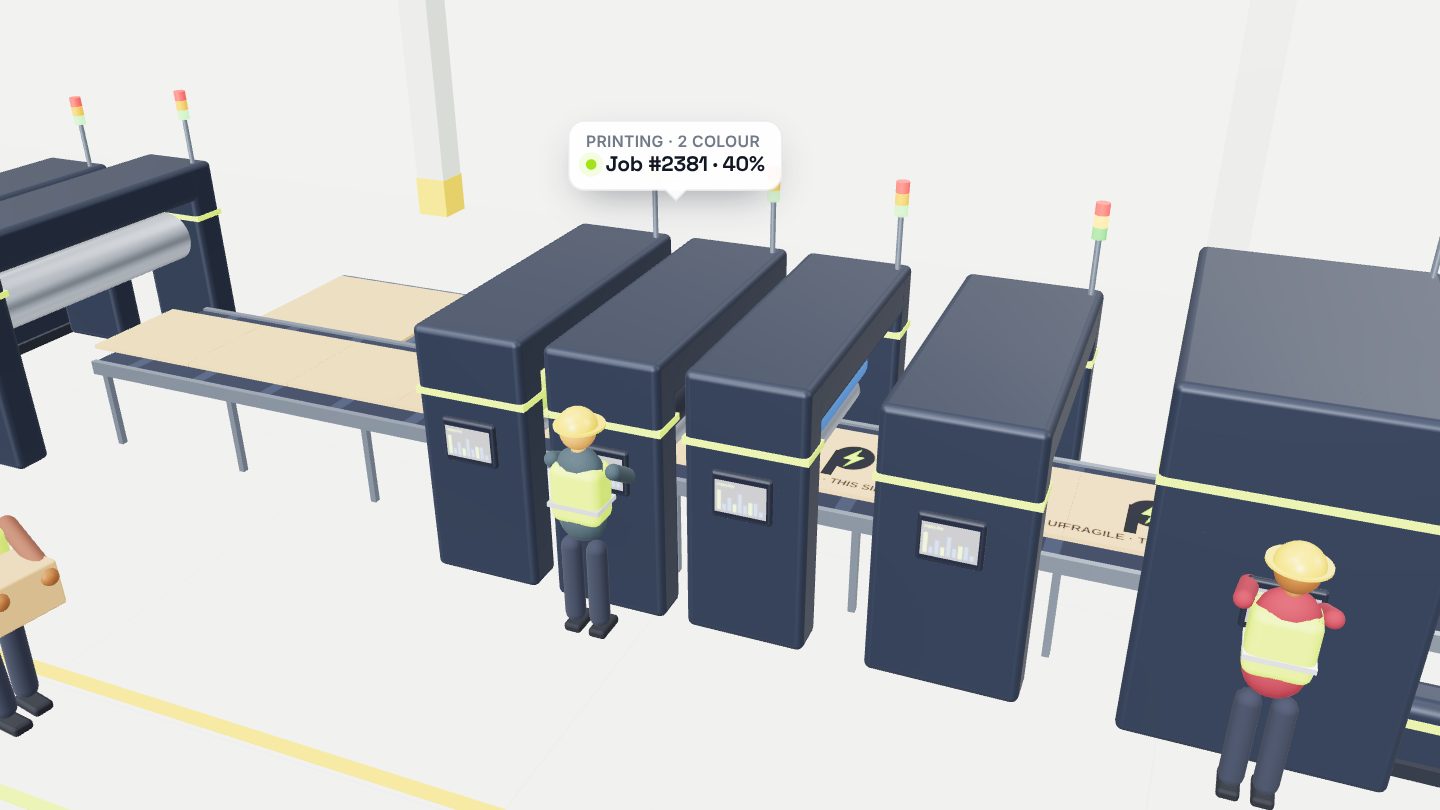
Flexo printing

Sheets pass through flexo print units, one colour per unit. Plates, ink viscosity and registration are set per job, and the first sheet is approved before the run.

Who's involved: Printer operator, ink mixer, QC for first-piece approval
Where money leaks

Long make-ready, ink wastage, colour mismatch and rejection because the approved artwork version was not at the machine.

With zappy.day

Artwork version, plate and ink details stay on the job card. First-piece approval is recorded with a photo, and make-ready time is tracked by job.

Fewer print rejections
05 / 08

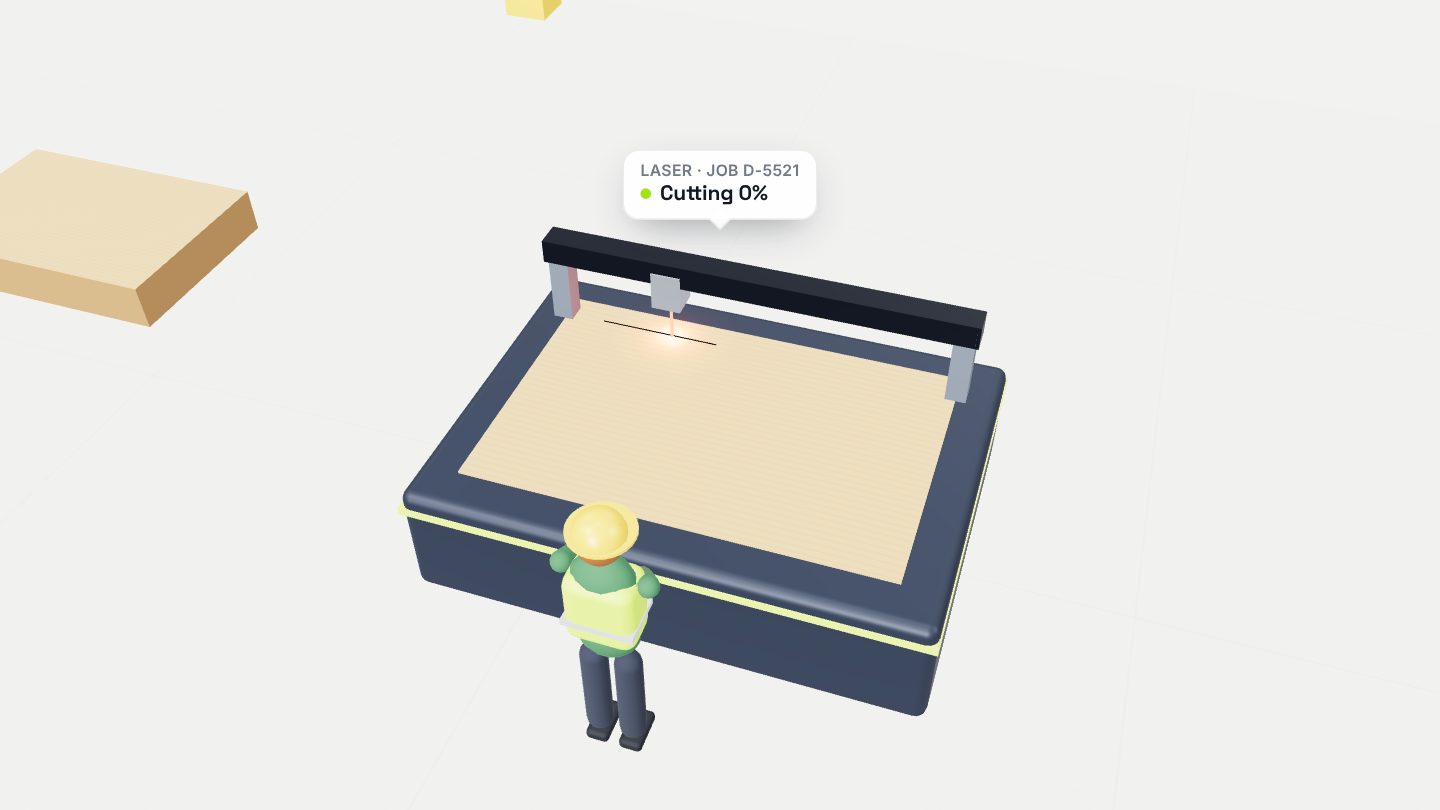
Slotting & die-cutting

Slotters cut the flaps for regular boxes. Special shapes go through a rotary or platen die-cutter using a die made for that box.

Who's involved: Slotter / die-cutter operator, die store in-charge
Where money leaks

The die can't be found or is damaged, set-up takes too long, and the machine waits for the next job card.

With zappy.day

A die register with location and condition. The machine-wise job queue is planned so the next job, die and sheets are ready before the current one ends.

Less machine idle time
06 / 08

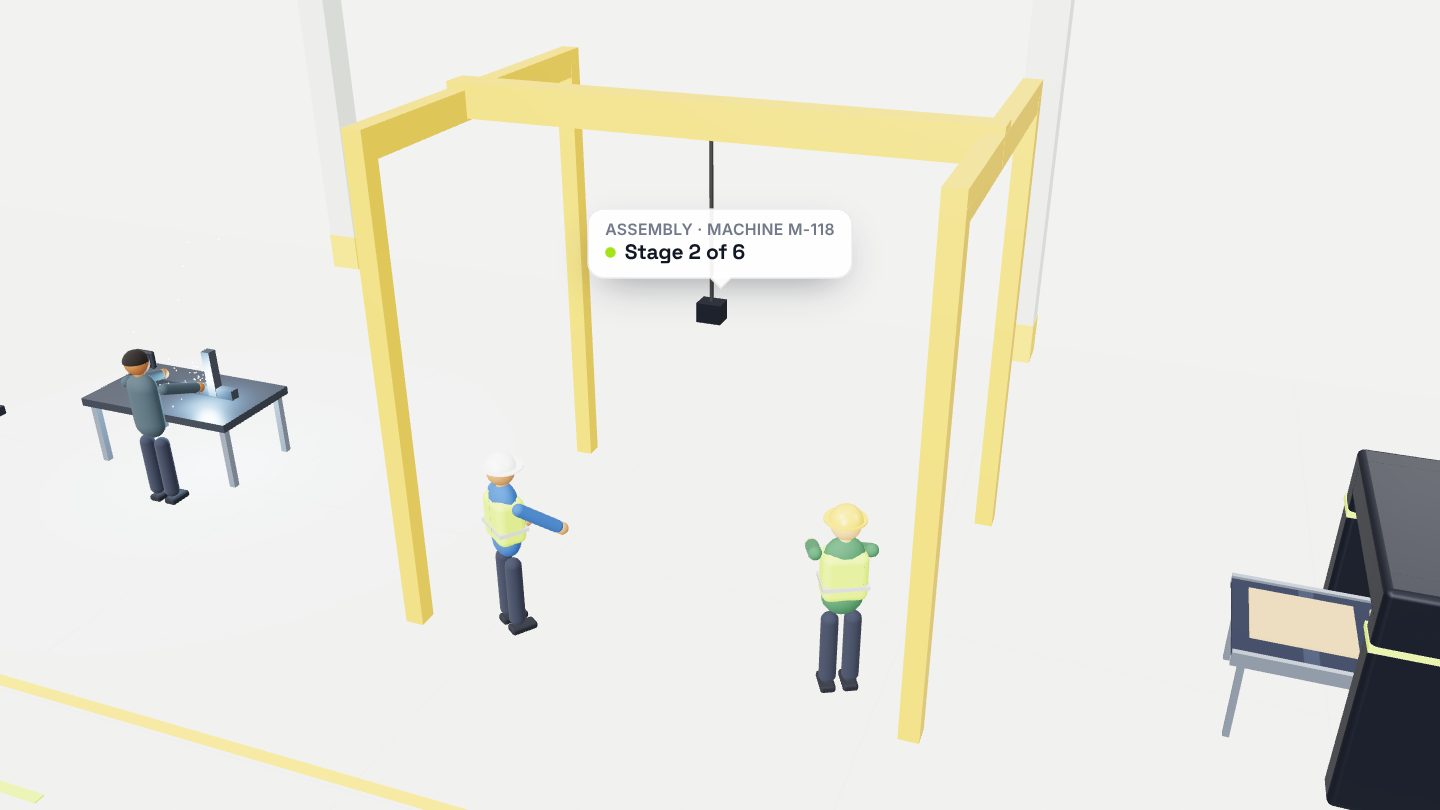
Folding & gluing

The folder gluer folds the blank and glues or stitches the joint at high speed. Boxes come out flat and are counted into bundles.

Who's involved: Folder gluer operator, bundling helpers
Where money leaks

Glue failures found at the customer, wrong bundle counts and boxes that are not tracked against the order.

With zappy.day

Output per job entered at the machine, with bundle counts and labels printed from the system, so dispatch knows exactly what is ready.

Exact counts per order
07 / 08

Quality check

Boxes are checked for dimensions, print, BCT (compression), burst strength, GSM and moisture against the customer's specs.

Who's involved: QC inspector, production manager
Where money leaks

Tests aren't recorded, so when a customer complains there's no proof of what was supplied, and the debit note is accepted.

With zappy.day

QC results are recorded against each job and batch. A test report can be shared with the customer in one click, and repeat failures show up in reports.

Proof for every batch
08 / 08

Dispatch & collection

Bundles are palletised, loaded by forklift, and sent with an invoice, delivery challan and e-way bill. Then the wait for payment begins.

Who's involved: Dispatch in-charge, forklift operator, driver, accounts
Where money leaks

Half-empty trucks, no proof of delivery, invoices sent late, and payments that drift to 90 to 120 days.

With zappy.day

Dispatch plan with documents generated together and proof of delivery captured on mobile. Invoices go out the same day, and automatic payment reminders follow on WhatsApp.
Faster payments
The whole process at a glance

Corrugated box plant: stage by stage.

StageWhere money leaksWhat zappy.day does
1. Paper reels & raw materialRegister says 40 reels of 120 GSM, the godown has 32. Wrong GSM or BF gets loaded to keep the corrugator running, and quality or margin takes the hit.Every reel is barcoded with GSM, BF, deckle, weight and supplier. Stock is reel-wise and live, consumption is posted per job, and reorder alerts come before the stand is empty.
2. CorrugationWrong deckle choice, splices, warp and set-up changes create trim and process waste. It is rarely measured by shift, so nobody knows the true number.Deckle planning picks the reel width that wastes least for the day's jobs. Trim and process wastage are entered per shift on mobile, and the owner sees it the same evening.
3. Slitting, scoring & sheet cuttingOver-production "just in case", miscounts and sheets cut to the wrong size for the next stage.Job card with exact sheet size and quantity, with produced vs planned shown live. Extra sheets go to stock and are offered on the next matching order.
4. Flexo printingLong make-ready, ink wastage, colour mismatch and rejection because the approved artwork version was not at the machine.Artwork version, plate and ink details stay on the job card. First-piece approval is recorded with a photo, and make-ready time is tracked by job.
5. Slotting & die-cuttingThe die can't be found or is damaged, set-up takes too long, and the machine waits for the next job card.A die register with location and condition. The machine-wise job queue is planned so the next job, die and sheets are ready before the current one ends.
6. Folding & gluingGlue failures found at the customer, wrong bundle counts and boxes that are not tracked against the order.Output per job entered at the machine, with bundle counts and labels printed from the system, so dispatch knows exactly what is ready.
7. Quality checkTests aren't recorded, so when a customer complains there's no proof of what was supplied, and the debit note is accepted.QC results are recorded against each job and batch. A test report can be shared with the customer in one click, and repeat failures show up in reports.
8. Dispatch & collectionHalf-empty trucks, no proof of delivery, invoices sent late, and payments that drift to 90 to 120 days.Dispatch plan with documents generated together and proof of delivery captured on mobile. Invoices go out the same day, and automatic payment reminders follow on WhatsApp.
We just walked your factory. Now let's fix the leaks.

A free visit or call. We'll show you which stage costs you the most, and how quickly it can be fixed.